





Xiangyu Gao
Senior Software Engineer at Zoox · Ph.D., University of Washington
- Physical AI
- VLM / VLA
- Autonomous driving perception
- Radar & sensor fusion
I am a Senior Software Engineer at Zoox in the Bay Area, CA. My current work focuses on vision-language models (VLMs) and vision-language-action models (VLAs) for physical AI. Previously, I was a Senior Research Engineer at PlusAI, where I was a core contributor to its VLA model, ranked #1 on the Waymo Open Dataset Vision-Based End-to-End Driving leaderboard (July 2026), and before that a machine learning engineer at Motional.
I received my Ph.D. in Electrical & Computer Engineering from the University of Washington in 2023, advised by Prof. Sumit Roy at FUNLAB. My earlier research spans radar perception and multi-sensor fusion for autonomous driving, combining statistical signal processing with deep learning, as well as learning-based optimization for wireless and edge-computing networks.
Now every appointment I have is a Doctor's appointment.
News
- Oct 2026Joined Zoox as a Senior Software Engineer (October 2026).
- Jul 2026As a core contributor, helped PlusAI's vision-language-action (VLA) model climb to 1st place on the Waymo Open Dataset Vision-Based End-to-End Driving leaderboard (announcement).
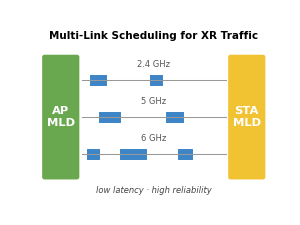
- 2025Wi-Fi 7 multi-link scheduling paper published in IEEE Transactions on Green Communications and Networking.
- 2024MMW-Carry, Deformable Radar Polygon, and Static Background Removal published in IEEE Sensors Journal.
- 2024Papers at ICC 2024, IEEE Globecom 2024, and VTC2024-Fall.
- 2023Received Ph.D. from UW ECE (dissertation: Efficient and Enhanced Radar Perception for Autonomous Driving Systems) and M.S. in Applied Mathematics.
- 2023Patent published: Deformable Radar Polygon Systems and Methods for a Virtual Bumper.
Experience
-
Oct 2026 – Present
Zoox
Senior Software Engineer · Bay Area, CAVision-language models (VLMs) and vision-language-action models (VLAs) for physical AI.
-
Aug 2024 – Oct 2026
PlusAI
Senior Research Engineer, Perception · Santa Clara, CA- Core contributor to PlusAI’s VLA model, ranked #1 on the Waymo Open Dataset Vision-Based End-to-End Driving leaderboard (July 2026).
- Led the design of the data engine and pretraining pipeline for VLA models, supporting scalable multimodal training and evaluation for end-to-end autonomous driving.
- Built BEV perception models for obstacles, lanes, and occupancy, with significant gains from temporal context modeling and learned motion (velocity) representations.
-
Sep 2023 – Jul 2024
Motional
Machine Learning Engineer · Seattle, WA (Remote)- Designed a transformer-based learnable radar angle-estimation model, achieving a 20× speedup over conventional algorithms by replacing hand-crafted signal processing with data-driven sequence modeling.
- Architected and deployed a multi-modal simulation pipeline (Ansys + CARLA) generating synchronized sensor data for large-scale training and evaluation of perception models.
-
Sep 2018 – Aug 2023
University of Washington
Research Assistant, FUNLAB (advisor: Prof. Sumit Roy) · Seattle, WARadar perception, radar-camera fusion, and learning-based wireless/edge optimization. Also Teaching Assistant, Fall 2022.
-
Jun – Sep 2022
Intel
Research & Development Intern · Santa Clara, CA -
Jun – Sep 2021
Volvo Cars
AI & AD Research Intern · Sunnyvale, CADeformable Radar Polygon for short-range collision avoidance (patent, IEEE Sensors Journal).
Selected Highlights
Citation counts from Google Scholar and GitHub stars as of October 2026.
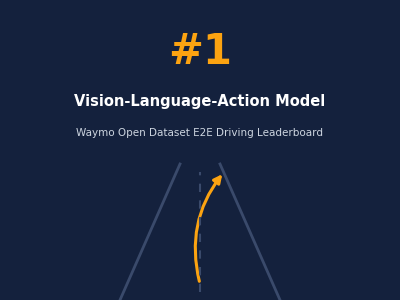
PlusAI Vision-Language-Action (VLA) Model
#1 on Waymo Open Dataset Vision-Based E2E Driving leaderboard (July 2026)
Publications
20+ publications · 1,100+ citations · h-index 14 · Google Scholar
2025
2024
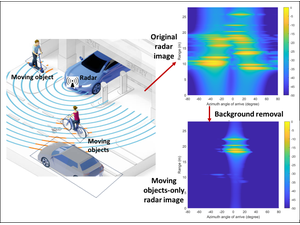
Static Background Removal in Vehicular Radar: Filtering in Azimuth-Elevation-Doppler Domain
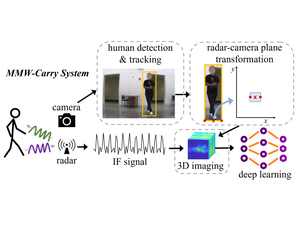
MMW-Carry: Enhancing Carry Object Detection through Millimeter-Wave Radar-Camera Fusion
Deformable Radar Polygon: A Lightweight and Predictable Occupancy Representation for Short-range Collision Avoidance
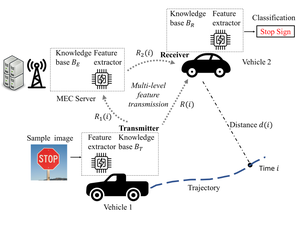
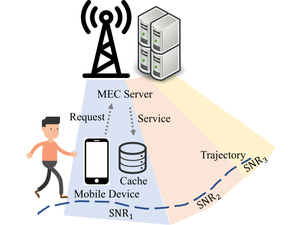
Multi-Level Feature Transmission in Dynamic Channels: A Semantic Knowledge Base and Deep Reinforcement Learning-Enabled Approach
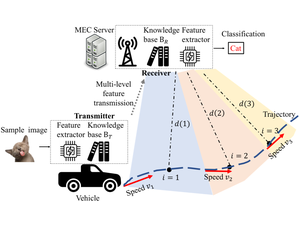
Learning for Semantic Knowledge Base-Guided Online Feature Transmission in Dynamic Channels
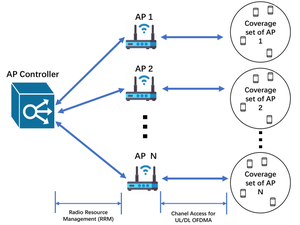
IEEE 802.11be Network Throughput Optimization with Multi-Link Operation and AP Controller
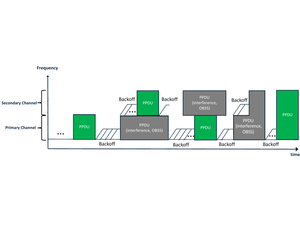
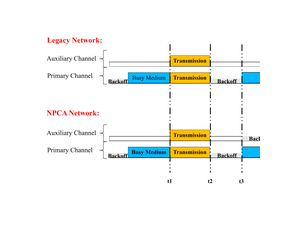
Optimized Non-Primary Channel Access Design in IEEE 802.11bn
Non-Primary Channel Access in IEEE 802.11 UHR: Comprehensive Analysis and Evaluation
2023
Efficient and Enhanced Radar Perception for Autonomous Driving Systems
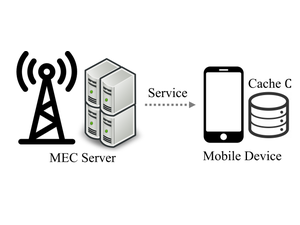
Joint Computing, Pushing, and Caching Optimization for Mobile Edge Computing Networks via Soft Actor-Critic Learning
Soft Actor-Critic Learning-Based Joint Computing, Pushing, and Caching Framework in MEC Networks
2022
Learning to Detect Open Carry and Concealed Object with 77GHz Radar
Cognition in Automotive Radars
2021
MIMO-SAR: A Hierarchical High-resolution Imaging Algorithm for mmWave FMCW Radar in Autonomous Driving
RODNet: Radar Object Detection Using Cross-Modal Supervision
Perception Through 2D-MIMO FMCW Automotive Radar Under Adverse Weather
Towards Millimeter-wave Radar Signal Processing and Learning-Based Applications
2020
RAMP-CNN: A Novel Neural Network for Enhanced Automotive Radar Object Recognition
2019
Experiments with mmWave Automotive Radar Test-bed
Patents
Deformable Radar Polygon Systems and Methods for a Virtual Bumper
Invited Talks
- May 2023PMCW Waveform and Its Use Cases — MathWorks (Invited Virtual Talk)
- Mar 2023Towards Millimeter-wave Radar Perception and Imaging — MathWorks (Invited Virtual Talk)
- Dec 2022Towards Millimeter-wave Radar Perception and Imaging — Metawave (Invited Virtual Talk)
- Sep 2022A Radar Pipeline Design for Indoor DL Applications — Intel (Invited Virtual Talk)
- Jun 2022Research Proposal for Automotive Radars — NXP Semiconductors (Invited Virtual Talk)
- Mar 2022Doppler-aided Radar Perception — Intel Labs (Invited Virtual Talk)
- Feb 2022MIMO-SAR Hierarchical High-resolution Imaging Algorithm — Microsoft Research (Invited Virtual Talk)
- Dec 2021Radar-based Perception — Mitsubishi Electric Research Laboratories (Invited Virtual Talk)
Show 8 earlier talks
- Dec 2021Towards Millimeter-wave Radar Signal Processing and Learning-based Applications — UW Ph.D. General Exam (Talk)
- Sep 2021Deformable Radar Polygon: A Lightweight Occupancy Representation for Collision Avoidance — Volvo Cars (Invited Virtual Talk)
- Sep 2021Deformable Radar Polygon for Virtual Bumper — Volvo Cars (Tech Sharing Seminar)
- Jul 2021Perception Through 2D-MIMO FMCW Automotive Radar Under Adverse Weather — IEEE ICAS (Invited Virtual Talk)
- Dec 2020RAMP-CNN: A Novel Neural Network for Enhanced Automotive Radar Object Recognition — NeurIPS ML4AD Workshop (Invited Virtual Talk)
- May 2020Radar Net for Object Recognition — UW Ph.D. Qualifying Exam (Talk)
- Nov 2019Experiments with Automotive Radar Test-bed — Asilomar Conference on Signals, Systems, and Computers (Invited Talk)
- Mar 2019Millimeter Wave FMCW Vehicle Radar: Testbed and Experiments — UW ECE Research Showcase (Invited Poster)
Education
-
Mar 2020 – Aug 2023
Ph.D. in Electrical & Computer Engineering
University of Washington, Seattle, WAAdvisor: Prof. Sumit Roy, FUNLAB. Dissertation: Efficient and Enhanced Radar Perception for Autonomous Driving Systems.
-
Mar 2021 – Aug 2023
M.S. in Applied Mathematics
University of Washington, Seattle, WA -
Sep 2018 – Mar 2020
M.S. in Electrical & Computer Engineering
University of Washington, Seattle, WA -
Sep 2014 – Jul 2018
B.E. in Telecommunication Engineering
Xidian University, Xi’an, China
Teaching & Service
Teaching
- UW EE 505: Probability and Random Processes (graduate), Teaching Assistant, Fall 2022
- UW EE 497 / 498 / 598: Engineering Entrepreneurial Capstone (undergraduate and graduate)
Capstone Project Mentoring (with PACCAR)
- Camera and Radar Fusion for Object Detection, 2020
- LiDAR and Radar Interference and Synchronization using Short Range Communication, 2020
- Automotive Radar Imaging, 2019
Professional Service
- Editorial Board Member, Journal of Electrical and Electronic Engineering (JEEE), 2022–2023
- Program Committee, ML4AD Workshop at ICML 2022 and IJCAI 2022
- Scientific Review Committee, Washington State Science & Engineering Fair, 2022
- MS Admission Triage Committee, University of Washington, 2021
- Journal reviewer: Science Robotics, IEEE Transactions on Intelligent Vehicles, IEEE Transactions on Vehicular Technology, IEEE Transactions on Wireless Communications, IEEE Transactions on Microwave Theory and Techniques, IEEE Sensors Journal, IEEE Open Journal of the Computer Society, IEEE Access, IET Signal Processing, International Journal of Communication Systems, ICT Express, MDPI Electronics
- Conference reviewer: ICML, IJCAI, ICASSP, ICC, VTC, DySPAN, PIMRC, IEEE/CIC ICCC, ISPA
Bio
Short bio (third person, for talks and introductions)
Xiangyu Gao is a Senior Software Engineer at Zoox in the Bay Area, CA. His current work focuses on vision-language models (VLMs) and vision-language-action models (VLAs) for physical AI. Previously, he was a Senior Research Engineer at PlusAI (2024–2026), where he was a core contributor to PlusAI's VLA model, ranked #1 on the Waymo Open Dataset Vision-Based End-to-End Driving leaderboard in July 2026, and a machine learning engineer at Motional (2023–2024). During his Ph.D., he interned at Volvo Cars (2021) and Intel (2022). He received his Ph.D. in Electrical & Computer Engineering from the University of Washington in August 2023, advised by Prof. Sumit Roy at FUNLAB; his dissertation, Efficient and Enhanced Radar Perception for Autonomous Driving Systems, developed radar signal processing and deep learning methods for autonomous driving. His research has spanned radar perception, radar-camera fusion, and learning-based optimization for wireless and edge-computing networks, with 20+ publications and over 1,100 citations.
Xiangyu received a B.E. degree in telecommunication engineering from Xidian University, Xi’an, China, in 2018, and an M.S. degree in electrical and computer engineering from the University of Washington, Seattle, WA, USA, in 2020. He also received an M.S. degree in Applied Mathematics from the University of Washington in 2023.